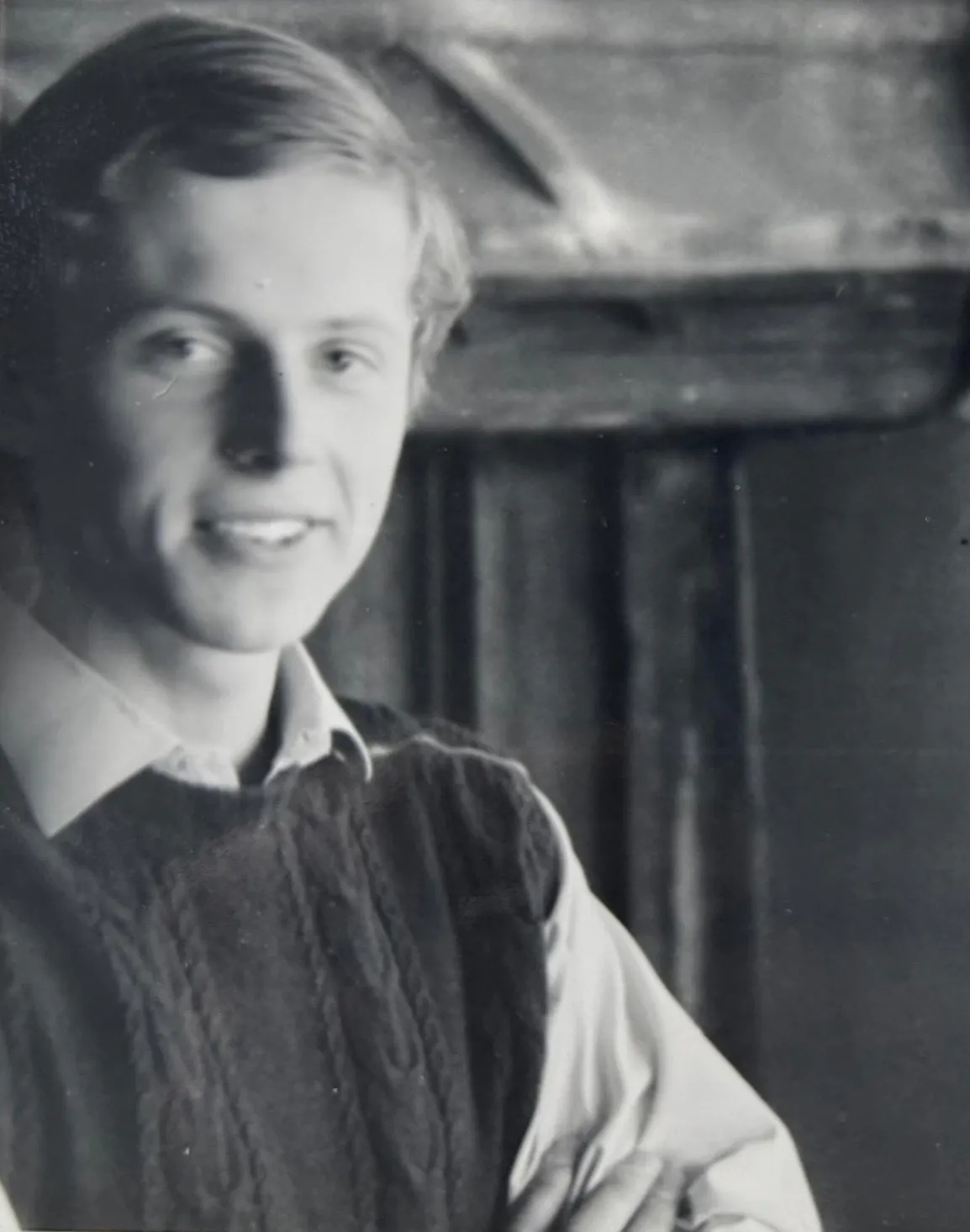
Dr Helge Boy Petersen 1945 - 2026
A tribute to Dr Helge Boy Petersen
A year or so after UWC Atlantic (then just Atlantic College) opened, a local boy remembers driving down on a Saturday night to investigate this mysterious new place. He wasn’t allowed in, but of course there are ways of getting onto campus without going through Main Gate. Having successfully infiltrated, he was disappointed to find nothing more than “a lot of very blond boys doing circuit training in the Blue Garden at 10pm. This place won’t last,” he reported back to his friends.
That it lasted, against the odds, is due in no small part to the enthusiasm and the boundless energy (for more than just Saturday night circuit training) of the early students. Asked which of them was likely to have been doing push-ups in the Blue Garden at an unearthly hour, the most common reply from members of the original AC cohort was close to unanimous: Helge Petersen.
Helge was born in Flensburg, near the German-Danish border, less than a week after the end of the Second World War. “Early childhood was totally untouched by the war,” he remembered, but in 1952 his family relocated to Bochum, which had been heavily bombed. That move south was an awakening to the wider world, but there was still “sceptical disbelief” from his family when Helge’s headmaster nominated him as a candidate for a scholarship to Atlantic College in 1962.
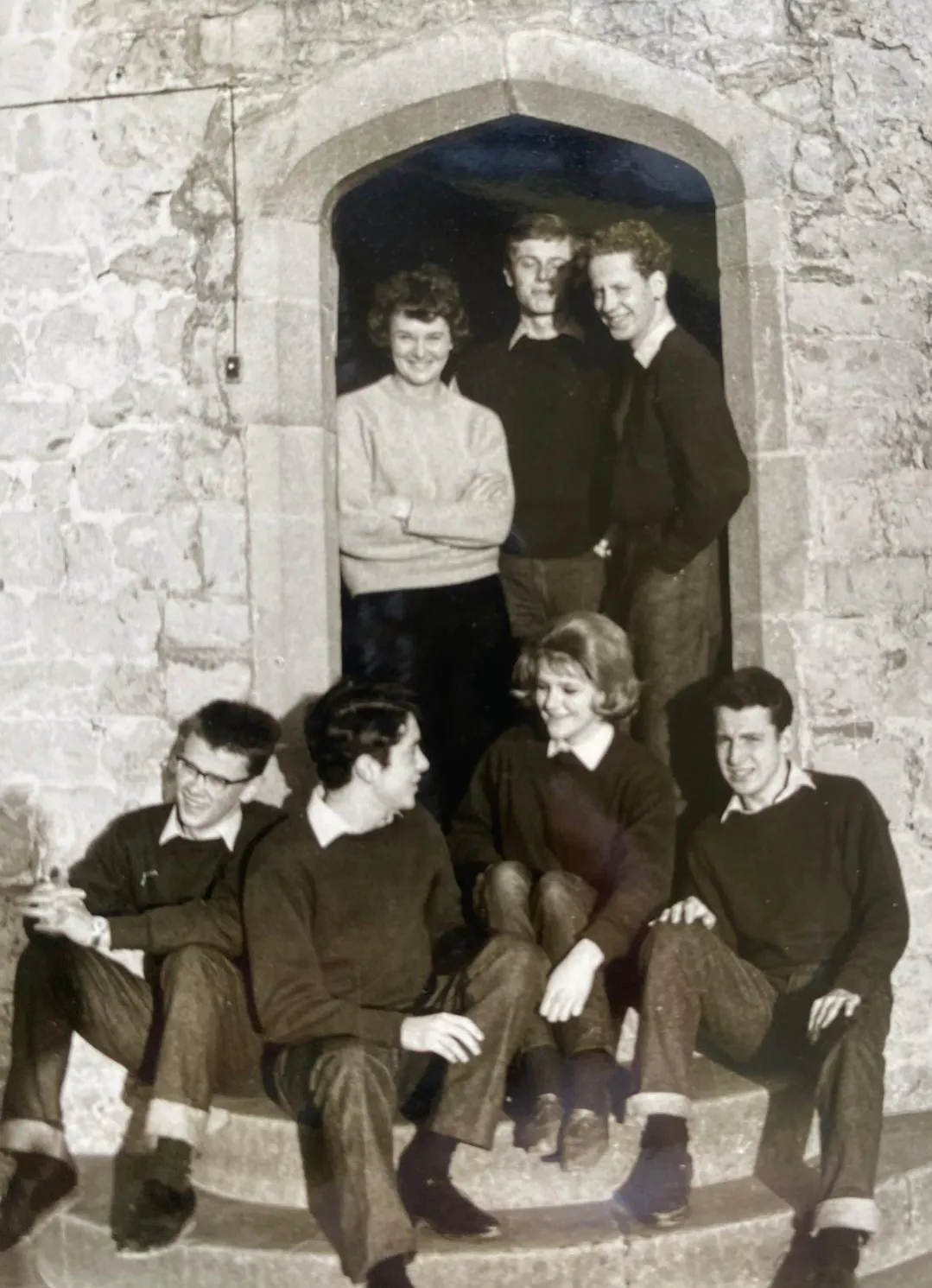
An interview in Bonn, then capital of West Germany, followed. “When, weeks later, the acceptance letter came, the honour was too great to say no. Also, my desire to get out was tremendous.” Helge was part of the original group of seven scholarship students from West Germany who arrived, having travelled separately, in Wales on September 19th, 1962.
At first sight, “Atlantic College seemed like a dream to me: the distinctness of the castle, the beauty of the place and the coast, the intensity of a closely-knit body of students and teachers.” Closeness is the main emotion Helge associated with those early months in the college’s existence: “We are close to each other, close to the sea, and close to bankruptcy,” he recalls the students saying.
“For me, this was a new world of beauty, but also purposefulness.” Helge threw himself into any sporting activities on offer, and was out sailing the Fireballs whenever he had the chance. He was also a regular on the college tennis courts, and a key part of the Rescue Boat crew.
In March 1964, a college boat saved lives for the first time. Steering through seven-foot waves off Southerndown, Helge was part of the crew (alongside Andreas Schwerdtfeger and Hans-Christoph Schwab) who saved two brothers from the icy water after a sailing dinghy capsized. The significance of an all-German crew risking everything to save British lives wasn’t lost on the local press, and the story was also reported back in Germany.
After graduating a few months later, Helge followed a similar path to his closest friend from AC, Hans-Christoph. Both studied law in Berlin and Bochum, and both subsequently went to Harvard and Columbia, among the first UWC graduates to tread the now well-worn path to Ivy League colleges.
Helge took a role at McKinsey, eventually becoming a junior partner, and later served as CEO for the Prince Thurn und Taxis Group (the Thurn und Taxis family remain the owners of Duino Castle, which almost counts as a UWC connection). A successful venture capitalist, he was also proud of having founded the largest geothermal company in Germany.
In the final year of his life, Helge reconnected with old friends from AC, speaking with some of them for the first time in more than six decades. His last message to the group was full of enthusiasm at having discovered ChatGPT, which he immediately asked for information on what Atlantic College is like now. To the end, Helge remained fiercely proud of the AC connection and his role as one of the first German students.
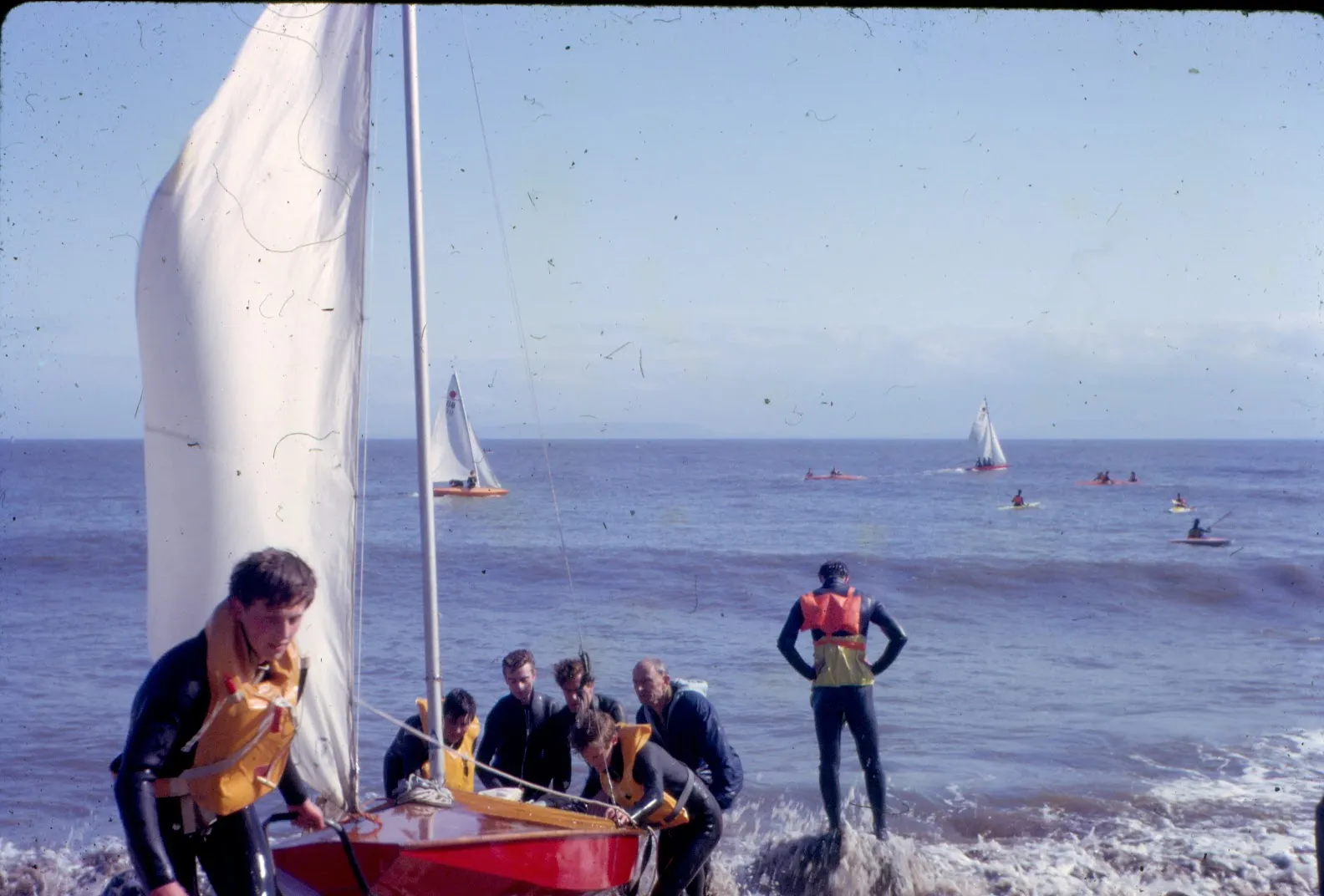
Helge and friends sailing. Photo courtesy of Eric Jeffries (AC 62-64)